Request call back
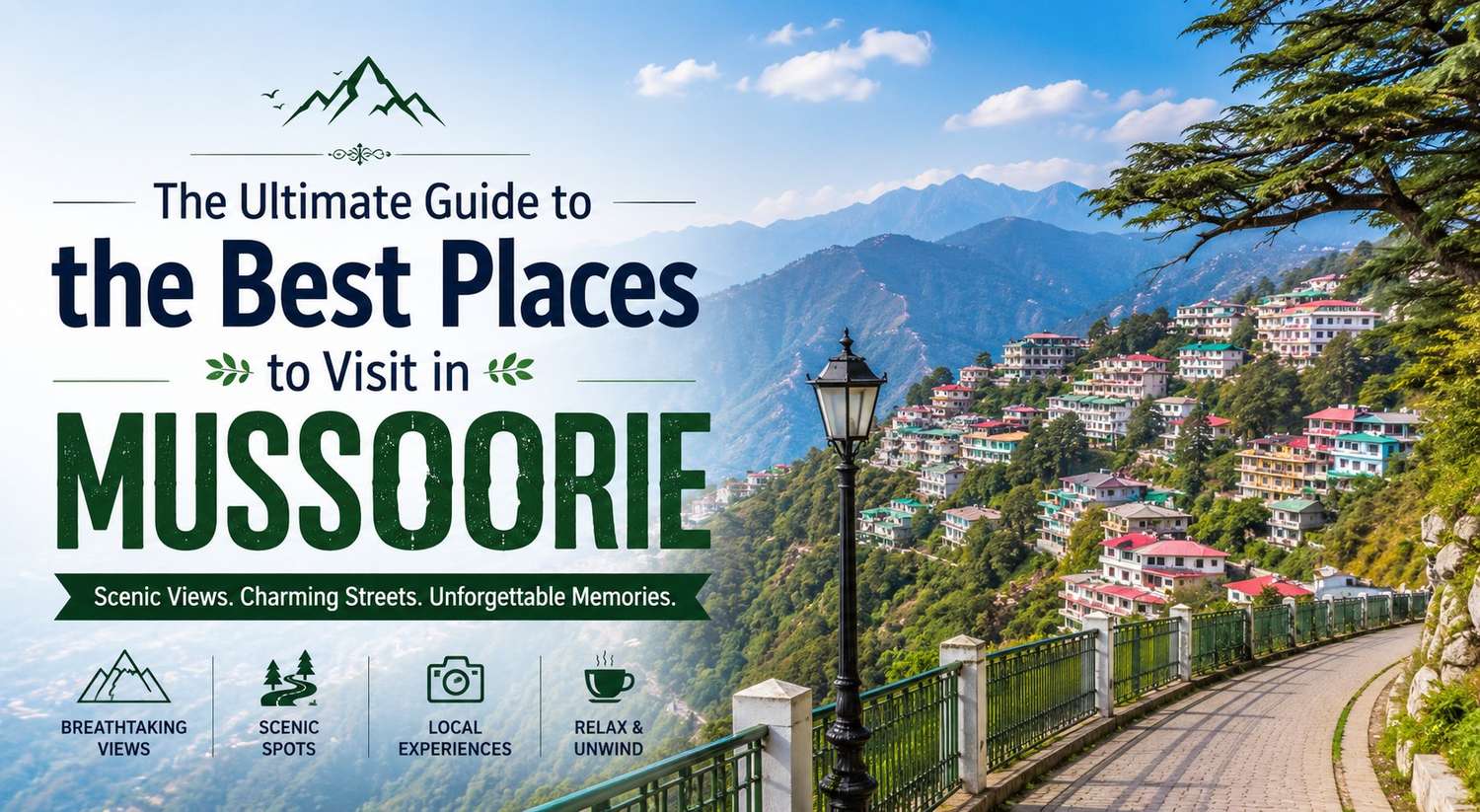
The Ultimate Guide to the Best Places to Visit in Mussoorie
Nestled at an altitude of over 6,500 feet in the majestic Garhwal Himalayan range, Mussoorie has affectionately been called the "Queen of the Hills" for nearly two centuries. Discovered as a quiet getaway by British military officers in the 1820s, this charming town in Uttarakhand has evolved into one of India’s most iconic hill stations.
Whether you are a soul-seeker looking for misty mountain air, a history buff chasing colonial architecture, or an adventure enthusiast gearing up for alpine treks, Mussoorie delivers.
This comprehensive guide breaks down the absolute best places to visit in Mussoorie, categorized to help you plan the perfect itinerary.
The Iconic Landmarks (The Must-Visits)
If it is your first time stepping into the misty lanes of this hill station, these primary attractions form the vibrant pulse of Mussoorie tourism.
1. The Mall Road: The Living Heart of the Town
No trip to Mussoorie is complete without an evening stroll down the legendary Mall Road. Extending from Library Bazaar (Gandhi Chowk) to Picture Palace, this bustling, vehicle-free promenade feels like a step back into a colonial era, albeit packed with modern energy.
Lined with vintage lampposts, quaint wooden benches, colonial-style structures, vibrant handicraft shops, and cozy modern cafes, Mall Road is where local culture meets tourist leisure. As the sun dips below the horizon, the road glows with twinkling lights, and the cool mountain wind pairs beautifully with a steaming plate of local momos or a cup of hot chocolate.
- Best For: Shopping, local street food, and evening strolls.
- Pro Tip: Avoid visiting during peak afternoon hours; the true charm unfolds right after sunset when the valley below lights up like a constellation.
2. Kempty Falls: Mussoorie’s Most Famous Cascade
Located roughly 15 kilometers from the main town center on the road toward Chakrata, Kempty Falls is an undeniable crowd-puller. Developed as a picnic spot way back in 1835 by British officer John Mekinnan, this perennial waterfall features giant streams of water jumping over 40 feet across multiple tiers before crashing into a massive natural pool at the bottom.
The atmosphere here is constantly buzzing. You can rent clothes to take a refreshing dip in the cool mountain water, enjoy local snacks at the surrounding stalls, or take a ropeway ride over the valley to view the majestic cascades from above.
- Timings: 6:00 AM to 6:00 PM.
- Best For: Family picnics, swimming, and photography.
- Insider Note: Because of its immense popularity, it can get incredibly packed on weekends. Arrive before 9:00 AM to enjoy the falls in relative tranquility.
3. Gun Hill: Panoramic Views and Ropeway Thrills
Standing as the second-highest peak in the Mussoorie region, Gun Hill carries an intriguing historical legacy. During the pre-independence era, a live cannon was placed atop this hill and fired precisely at noon every day to help the townsfolk synchronize their watches.
Today, while the cannon is gone, Gun Hill remains a premier viewpoint. You can reach the top via a thrilling 400-meter ropeway cable car ride starting right from Mall Road. Once at the summit, you are treated to a stunning, unhindered 360-degree panoramic view of the snow-capped Himalayan peaks (including Badrinath and Kedarnath) on one side, and the sprawling, emerald-green Doon Valley on the other.
- Ropeway Fee: Approximately ₹150–₹200 per person (round trip).
- Best For: Sunset photography, valley views, and carnival-style games at the peak.
Panoramic Viewpoints & Natural Escapes
If your true goal is to escape the concrete noise of the plains and immerse yourself in absolute mountain serenity, add these nature spots straight to your itinerary.
4. Lal Tibba: The Highest Peak in the Region
Situated in the serene, upper cantonment area of Landour, Lal Tibba (which translates to 'Red Hill') is the highest geographical point in Mussoorie. Because of its elevation and isolation from the main commercial center, it offers some of the most dramatic, untouched vistas of the Greater Himalayas.
On a crystal-clear morning, using the high-powered Japanese telescopes permanently mounted on the viewing deck, you can witness the sun hitting the majestic peaks of Bandarpunch, Kedarnath, and Nanda Devi. The quiet pine forests wrapping around the roads leading up to Lal Tibba make the journey just as beautiful as the destination.
- Entry Fee: ~₹50 for access to the telescope decks.
- Best Time to Visit: Sunrise or sunset during autumn and winter for maximum atmospheric clarity.
5. Camel’s Back Road: A Peaceful Nature Stroll
For those seeking a quiet morning walk or a peaceful evening run without dealing with the tourist rush of Mall Road, Camel’s Back Road is the ideal destination. This 3-kilometer loop gets its name from a natural, ancient rock formation that mimics the distinct silhouette of a hunched camel.
The road curves gracefully along the edge of the mountainside, flanked by dense deodar and oak trees. Walking here gives you a beautiful sense of mountain silence, interrupted only by the rustling of leaves and the occasional horse ride passing by.
- Ideal For: Nature walks, meditation, jogging, and catch-up conversations.
- Monsoon Highlight: During July and August, heavy mist often blankets this road completely, making you feel as though you are literally walking through the clouds.
6. Cloud’s End: Where Mussoorie Finishes
Tucked away at the absolute western edge of Mussoorie, about 6 kilometers from the Library Chowk, lies Cloud’s End—a tranquil geographic boundary where the urban town officially stops and thick, protected flora begins.
Surrounded by a vast 400-acre estate of dense deodar and oak forests, this area is a sanctuary for solitude-seekers. It features a historic heritage building built by the British in 1838 (now a rustic resort) and provides excellent, quiet walking trails through the woods that open up into breathtaking, silent valley viewpoints.
- Best For: Birdwatching, digital detoxing, and forest bathing.
Rich History, Science & Offbeat Treasures
Mussoorie holds deep historical roots that go far beyond standard sightseeing. These spots blend old-world exploration with incredible topography.
7. Sir George Everest’s House & Peak
History and nature come together spectacularly at the estate of Sir George Everest, the famous Welsh geographer and Surveyor General of India after whom Mount Everest was named. Sir George lived here for over a decade, using this strategic, high-altitude spot as a laboratory to conduct parts of the monumental Great Trigonometrical Survey of India.
The recently restored white colonial mansion serves as a museum highlighting historical geography. However, the true showstopper is the short trek from the house up to the George Everest Peak. Walking past colorful Tibetan prayer flags flapping violently in the wind, you reach a ridge that offers dizzying, dramatic drops into the Aglar River Valley on one side and the Doon Valley on the other.
- Best For: Trekking, drone photography, camping, and historic exploration.
- Difficulty: Easy to moderate 20-minute uphill walk from the parking lot.
8. Landour & Char Dukan: The Twin Town Aesthetic
Just a stone's throw above Mussoorie sits Landour, its quieter, artistic sister town. Because of strict cantonment laws, Landour has completely banned modern commercialization, keeping its old-world, 19th-century British charm fully intact.
The heart of Landour centers around "Char Dukan"—a historic cluster of four small, interconnected shops that have been serving travelers for generations. Here, you can sit beneath towering pine trees and enjoy artisan wood-fired pizzas, bun-omelets, fresh waffles, and cinnamon tea. Just down the road is the iconic Landour Bakehouse, famous for its fresh gingerbread, cross buns, and vintage mountain aesthetics.
- Cultural Connection: Landour is famously home to India's beloved author, Ruskin Bond.
- Vibe: Quiet, artistic, respectful, and highly scenic.
9. Happy Valley: A Window into Tibetan Culture
Happy Valley holds immensely important historical significance; it is the exact geographical location where His Holiness the 14th Dalai Lama first established his refuge settlement in India in 1959 before moving to Dharamshala.
Today, this peaceful valley is home to a thriving Tibetan community. Walking through its clean, quiet streets, you will encounter the beautiful Shedup Choepelling Monastery, colorful prayer wheels, and traditional Tibetan housing. The air here is thick with spirituality and calming chants, offering a refreshing cultural contrast to the rest of the hill station.
- Don't Miss: Sampling authentic Tibetan thukpa (noodle soup) and handmade momos at the small local eateries inside the valley.
Family Picnics & Offbeat Waterfalls
If you are looking for relaxing spaces to sit back with a book or watch your kids play safely, Mussoorie has several well-maintained parks and hidden natural springs.
10. Company Garden (Municipal Garden)
Located roughly 3 kilometers from Mall Road in the Happy Valley direction, Company Garden is a flawlessly manicured botanical wonderland maintained by the Garden Welfare Association. It houses more than 800 diverse species of colorful, exotic flowers, an impressive green nursery, and massive old fountains.
For families traveling with children, it functions as a mini-amusement park, featuring a small artificial lake with paddle boating facilities, toy trains, and safe play zones. It also features the K Dev Bhoomi Wax Museum within its premises.
- Entry Fee: ₹50 per person.
- Best For: Family photographs and casual afternoon relaxation.
11. Bhatta Falls & Jharipani Falls: The Quiet Alternatives
If the massive crowds of Kempty Falls feel overwhelming, Mussoorie offers two hidden gems that receive a fraction of the commercial traffic.
- Bhatta Falls (7 km from main town): Known for its crystal-clear water and natural rock pools. It features a small cable car facility to transport you from the main road down to the fall area, along with an eco-friendly park structure perfect for kids.
- Jharipani Falls (8 km from town): Tucked away near the village of Jharipani, reaching this waterfall requires an enjoyable 1.5-kilometer trek through a rocky mountain path. The reward is a secluded, raw natural waterfall surrounded by wild flora—perfect for absolute isolation.
Quick Comparison of Top Spots
|
Destination |
Best Feature |
Crowd Level |
Ideal Timing |
|---|---|---|---|
|
Mall Road |
Shopping & Street Food |
High |
Post-Sunset |
|
Kempty Falls |
Multi-tiered swimming pools |
Very High |
Early Morning (7 AM - 9 AM) |
|
Lal Tibba |
High-altitude Himalayan Views |
Low to Medium |
Sunrise / Clear Mornings |
|
George Everest Peak |
Historic Ridge Trekking |
Medium |
Late Afternoon / Sunset |
|
Char Dukan (Landour) |
Colonial Vibe & Bakeries |
Low |
Breakfast / Brunch |
Crucial Travel Logistics for Mussoorie
The Best Time to Visit
- Summer (March to June): The most popular season. Temperatures stay between 10°C and 25°C, providing a blissful escape from the scorching heat of the Indian plains.
- Monsoon (July to September): The hills turn an intense, neon green, and mist rolls through the valleys. While beautiful, be wary of occasional landslide warnings and road closures.
- Winter (October to February): Ideal for honeymooners and winter lovers. Temperatures can drop below freezing, and if you are lucky, you can experience a magical Himalayan snowfall between late December and January.
How to Reach Mussoorie
- By Air: The nearest airport is Jolly Grant Airport in Dehradun, located roughly 60 kilometers away. From there, you can easily hire a direct prepaid taxi to Mussoorie (approx. 2 hours).
- By Train: Dehradun Railway Station is the nearest railhead (36 km away), well-connected to major cities like Delhi, Mumbai, and Kolkata.
- By Road: Mussoorie is excellently connected via smooth highways. A drive from New Delhi takes roughly 6 to 7 hours via the Delhi-Dehradun Expressway.
Frequently Asked Questions (FAQs)
Q1: How many days are enough to explore Mussoorie completely?
A comfortable 3-day itinerary is usually ideal. You can dedicate Day 1 to Mall Road, Gun Hill, and local sightseeing; Day 2 to Kempty Falls and George Everest House; and Day 3 to the peaceful lanes of Landour, Char Dukan, and Lal Tibba.
Q2: Can we see snow in Mussoorie?
Yes, Mussoorie experiences snowfall during the peak winter months, usually between late December and mid-January. Nearby areas like Dhanaulti and Lal Tibba receive heavier snowfall due to their higher altitude.
Q3: What should I buy when shopping on Mall Road?
Mussoorie is highly famous for its exquisite hand-carved wooden artifacts, high-quality local woolens (shawls, sweaters, and stoles), hand-woven carpets from Tibetan markets, and home-made fruit jams and preserves (especially apple and plum).
Q4: Is Mussoorie safe for solo female travelers or couples?
Absolutely. Uttarakhand is widely recognized as one of the safest states for travel in India. The locals are exceptionally warm, helpful, and tourist-friendly. Standard safety precautions regarding night travel in remote areas still apply.
Q5: How do I avoid traffic jams in Mussoorie?
During peak summer weekends, Mussoorie can experience heavy traffic bottlenecks. To beat this, try to reach the hill station early in the morning on weekdays, rent a scooter or motor-bike locally to bypass car jams easily, and utilize walking routes like Camel's Back Road whenever possible.